

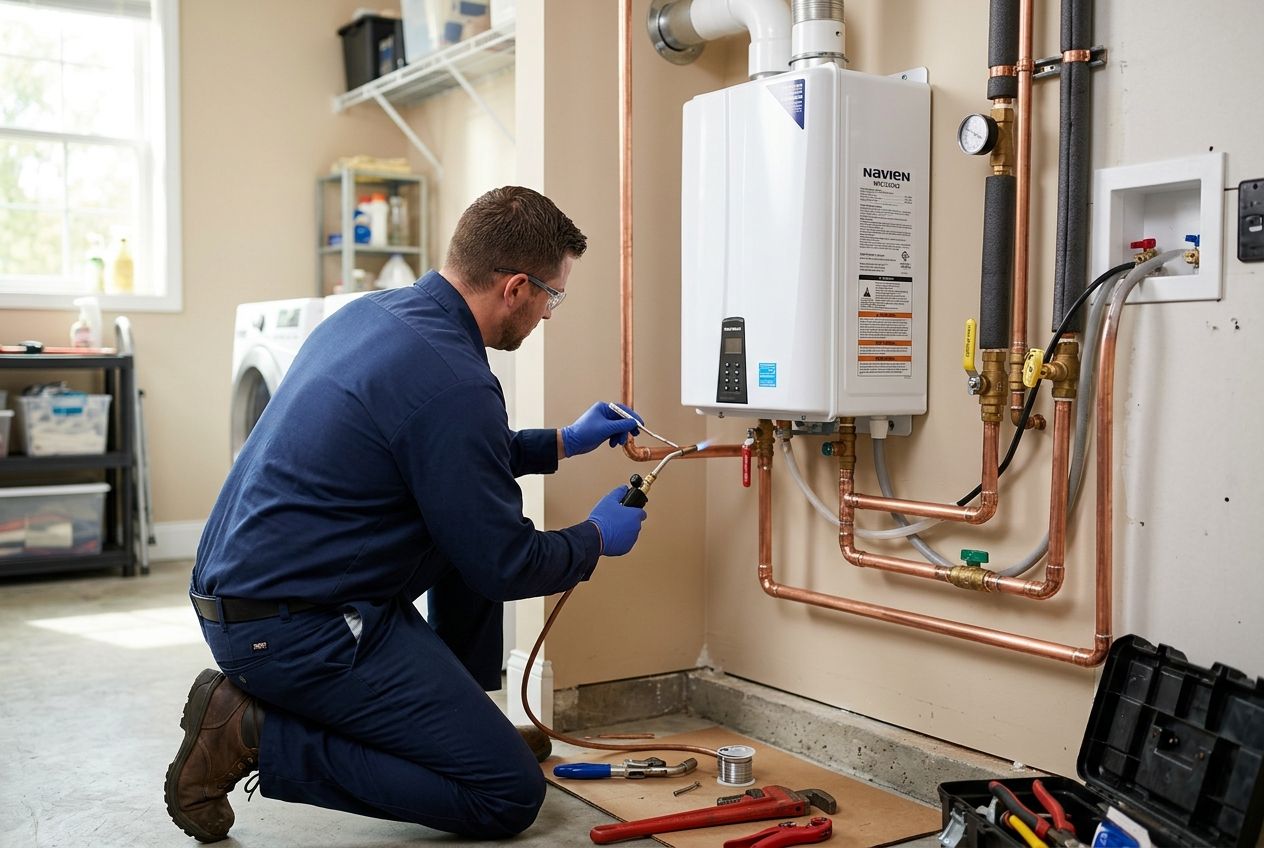
A little water near a water heater can be easy to ignore—until it damages a finished floor, turns into a no-hot-water problem, or reveals that the tank is reaching the end of its life. The right response is calm and methodical: protect the area, identify where the water is coming from, and get a clear diagnosis before choosing a repair or replacement.
Start by protecting the area
If you see active water around the unit, move stored belongings, rugs, and anything that could be damaged out of the area. Avoid standing water around electrical connections. If the water is spreading quickly, shut off the cold-water supply valve above the heater when it is safe to reach, then call for help.
You do not need to disassemble the unit or guess at a repair. A quick photo of the water, the visible connections, and the model label can be useful when you call. The goal is to limit damage while preserving enough information for a technician to determine whether the issue is outside the tank or inside it.
Look for the source, not just the puddle
Water may appear at the base even when the tank itself is not the source. Supply connections at the top, the temperature-and-pressure relief valve, a drain valve, nearby plumbing, or condensation can all create water around the unit. Each has a different cause and a different path forward.
A technician will look at the connection points, the valve discharge path, the condition of the tank, and the age and performance of the equipment. This matters because tightening a connection may solve one problem, while water coming from the body of the tank can signal internal corrosion that cannot be repaired reliably.
- Water at a fitting may be a connection or valve issue.
- Water from the tank body can point to an internal failure.
- Rusty water, rumbling, or unreliable hot water add useful context to the diagnosis.
When repair makes sense—and when replacement does
The age, condition, and source of the leak all matter. A focused repair can be the right call when the tank is in good condition and the issue is tied to a serviceable component. A replacement may be the more practical choice when the tank is leaking, the unit has repeated problems, or the household is already running short on hot water.
Replacement is also a chance to right-size the system. A household that has changed since the original heater was installed may benefit from a different tank capacity or a tankless option. The point is not to jump to the largest unit; it is to compare the options against actual hot-water demand, available space, installation requirements, and long-term goals.
Get a clear next step for your Cincinnati home
A water-heater problem is easier to manage when you know what you are dealing with before work begins. Ask what caused the water, what needs to be corrected, what the repair is expected to accomplish, and whether the current unit is likely to need more work soon. Those answers make the decision less stressful and more useful.
Home Heroes provides water-heater repair and installation across Greater Cincinnati. We assess the unit, explain the practical options, and give you a clear scope before work starts—whether the right next step is a repair, a replacement, or a planned upgrade.
Use this visit to plan ahead
If the current heater can be repaired, it is still helpful to ask what to watch for next. The age of the unit, the quality of the hot-water supply, maintenance history, and any visible rust or noise can help you decide whether to schedule routine service, budget for a future replacement, or simply keep an eye on the system.
If a replacement is recommended, ask how the proposed unit compares with what you have now, what installation details are included, and how the household's hot-water habits affect sizing. A good answer gives you a plan you can act on, not just an urgent decision in front of a cold shower.
Know what can wait and what cannot
A small drip at a connection may not carry the same urgency as water spreading from the tank, but it still deserves a clear plan. Active leaking, water close to electrical components, a loss of hot water, or visible damage to finished areas are all reasons to contact a professional promptly rather than hoping the symptom stops on its own.
For less urgent concerns, schedule an assessment before the next failure makes the decision for you. A planned visit gives you time to compare repair and replacement choices, consider the household's needs, and arrange work at a time that is easier on the home and your schedule.
More homeowner guides