

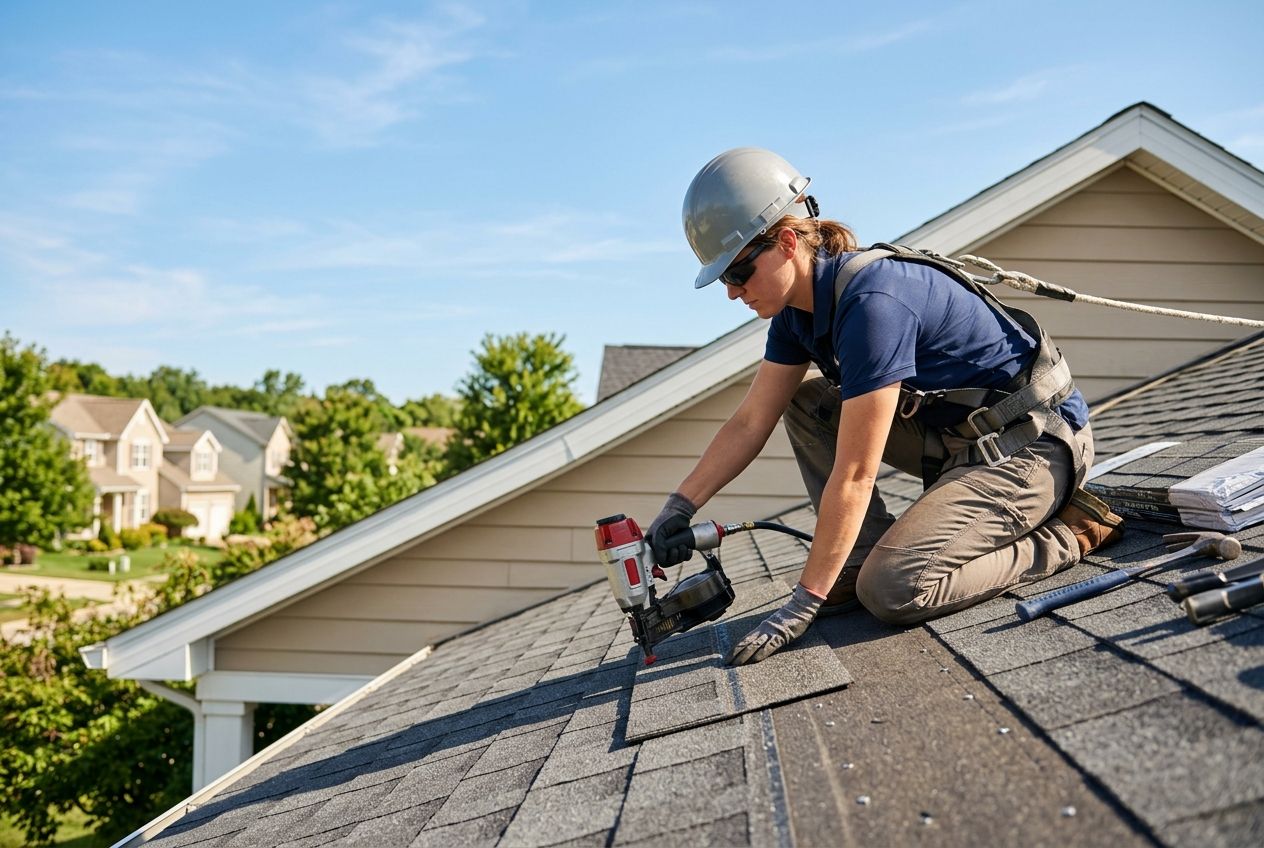
A roof problem does not automatically mean a full replacement. Sometimes a focused repair is the most sensible way to restore protection; other times, repeated repairs are only delaying a larger decision. An honest inspection looks at the whole roof system so the recommendation fits the condition of your home—not just the most visible shingle.
A repair starts with a defined problem
Roof repair is most useful when the issue is limited and the surrounding roof is still doing its job. That can include a localized area of wind damage, flashing that needs attention, a small penetration issue, or a handful of missing or damaged shingles. The key is confirming that the problem is genuinely contained.
A proper assessment should look at the area around the symptom, not simply replace the most visible material. Water can travel before it becomes visible indoors, and a roof leak may involve flashing, drainage, penetrations, or the layers below the shingles. Finding the source protects you from paying for the same repair twice.
Signs a replacement deserves a conversation
A roof may be ready for a replacement when wear is widespread, repairs have become recurring, or the roof is nearing the point where a focused fix no longer offers dependable value. Multiple leaks, extensive shingle deterioration, visible sagging, or damage affecting more than one section are reasons to ask for a whole-roof assessment.
Replacement is about more than new shingles. It is an opportunity to review ventilation, flashing, drainage details, and the condition of the roof deck where accessible. A clear scope should explain which layers are being addressed and how the crew will protect the property while the work is underway.
- Ask whether the issue is isolated or part of a broader pattern.
- Compare the likely life left in the roof with the cost and frequency of repairs.
- Get the scope of a replacement in writing before making a decision.
Do not wait on active leaks or storm damage
A small interior stain, lifted shingle, or drip after a storm can be tempting to watch for a while. The risk is that water reaches decking, insulation, or finished areas before the problem becomes obvious. Prompt inspection gives you more options and can keep a repair from becoming a larger restoration project.
If damage is active, focus on protecting the home first. Document what you can safely see, avoid walking on a damaged roof, and arrange an inspection. The next decision should be based on the actual condition, not on pressure to replace more roof than the property needs.
Choose the scope that protects the home
The best roof decision is one you can understand. A useful quote explains the condition found, the repair or replacement scope, the materials involved, and what the work is intended to solve. It should also make clear what would change the scope if hidden damage is discovered once the work begins.
Home Heroes serves Cincinnati homeowners with roof inspections, repairs, replacements, and storm-damage response. We start with a clear assessment and explain whether a focused repair is practical before recommending a larger project.
Questions to bring to a roof inspection
A useful inspection gives you more than a yes-or-no answer. Ask what area is causing the concern, whether the issue is isolated, what the repair is intended to correct, and what signs would indicate that the roof needs a larger conversation in the future. You should also understand how the work will protect landscaping, driveways, and finished areas around the home.
If replacement is the recommended path, ask how the scope addresses the roof system as a whole and what the project timeline looks like. Clear answers help you compare options without reducing the decision to a single price or a sales deadline.
Keep a record of the roof condition
A few photos after a storm, notes about when a leak first appeared, and records of prior roof work can make an inspection more productive. They give the team useful context and help you track whether a concern is new, returning, or spreading to another part of the home.
You do not need to climb onto the roof to collect that information. Ground-level observations and interior symptoms are enough to start the conversation. The important part is addressing the concern early and getting a recommendation that clearly separates immediate protection from longer-term planning.
More homeowner guides